TFT LCD screen Image-Retention Phenomenon Repair and Prevention Solution
 Mar 15, 2023|
 TFT LCD screen Image-Retention Phenomenon is also known as "burn-in". In a CRT display, it causes the phosphor to wear out and the pattern is burned into the display. But there is no actual heating or burning involved when using it on an LCD screen. If you encounter it, how will you solve it?

Definition and causes of the Image-Retention Phenomenon
Image-Retention Phenomenons are visible remnants of the previous frame, which some technicians describe as "screen burn-in."It is the result of continuously driving one point more than other points for a long time. How is it produced?
●The liquid crystal (LC) in TFT is a polar crystal material, the electric field can make it twist ;
●The liquid crystal (LC) in the TFT must be driven by AC; if DC is used, the polarity of the crystal will be destroyed;
●In fact, there is no absolutely symmetrical alternating current;
●When continuously driving the pixels of the TFT, the relevant slight imbalance will attract free ions to the internal electrodes, and the ions adsorbed on the internal electrodes will cause a driving effect similar to DC + AC.
TFT LCD screen Image-Retention Phenomenon Repair and Prevention Solution
1. Repair method
Fixed display content for a short period of time will not produce an image-retention phenomenon, if there is, the TFT display screen can be repaired as follows:
●There is a chance to restore the TFT power for several hours; (it may take 48 hours)
●Build an all-white image that moves across the screen for hours without turning on the backlight in the process.

●There are many repair software on the Internet that may also help. After the afterimage has appeared, it is more likely to reappear, we need to take preventive measures to prevent the reappearance.
2. Prevention Method
●Screen saver, when the system is not in operation, lets the pixels of TFT display different content, that is, display a mobile screen saver or switch content from time to time, to avoid displaying static pictures for more than 20 minutes;
●Clear the screen, and make the TFT fill in full black or white when the system is not operating;
●Turn off the backlight to further extend the life of the backlight LED;
●Power off, let the TFT screen power off, and sleep when not in use to avoid any unnecessary drivers;
●Signal, after power-on, the display scan signal should be continuously provided to avoid the TFT being driven by DC caused by the scan pause;
●Power supply sequence, pay attention to the sequence of power on and off.
TFT LCD screen Image-Retention Phenomenon test standard
Test (example):
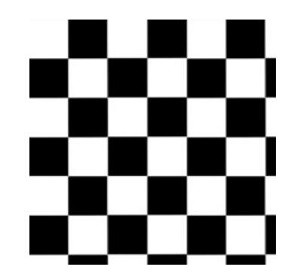
●Room temperature; black and white checkerboard display (about 60x60 pixels per grid); static display for 30 minutes.
●Judgment (example):
●The full screen displays 128 (50%) gray; after waiting for 10 seconds, no afterimage can be regarded as qualified.
How does the black and white checkerboard work?
-
For a normal white TFT, the white area receives the minimum driving voltage, the black area receives the maximum driving voltage, and the free ions inside the TFT will be easily attracted to the black area; (the area with a larger driving voltage)
-
When it turns to display the full screen 128 (50%) gray, the whole screen will use the same driving voltage, and the ions will leave the once attracted position in a short time;
-
In addition, when the full screen is 128 (50%) gray, it is easier to find abnormal displays.